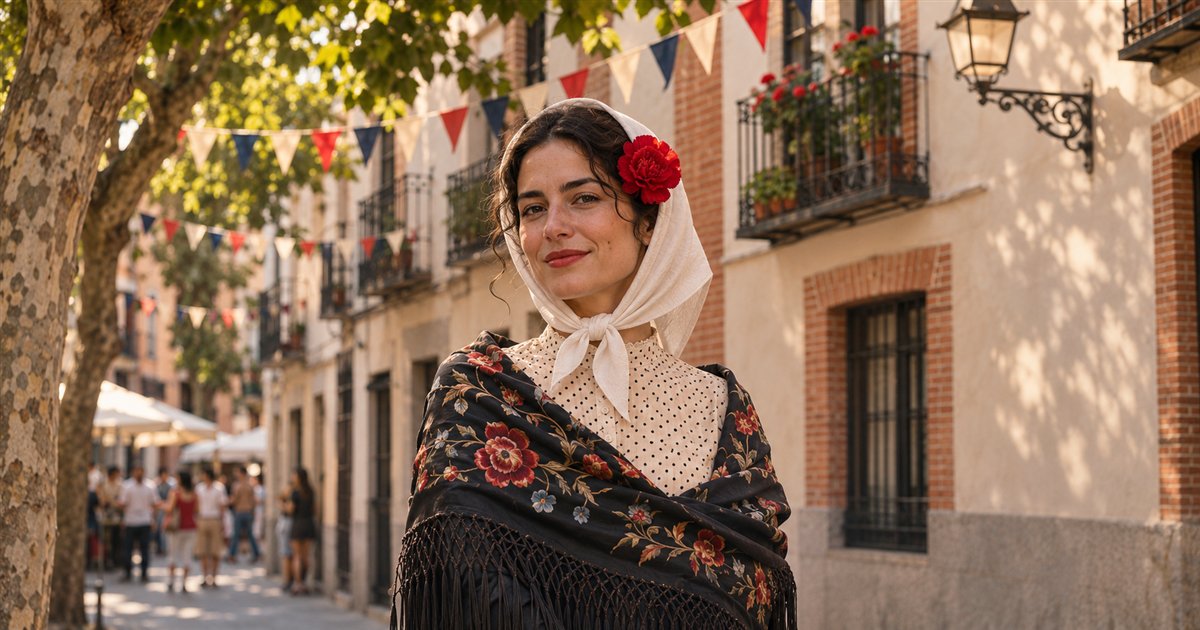
This blog is called Chulapa because of the letters in its name. When I was building the Jekyll theme, I borrowed the name from a Madrid typeface I wanted to use on the site. The blog took the theme’s name, and the word you see in the headline is still set in that typeface. To see where it came from, look up at a street corner in the old city.
From painted tiles to type
In La Latina, the Cava Baja street sign gives the name of the street in painted capitals. It belongs to a set of ceramic plaques that Madrid commissioned from Alfredo Ruiz de Luna in 1992. A municipal record puts the project at around 1,500 plaques for some 400 streets. Pedro Reina’s photograph of the Cava Baja sign · Madrid’s municipal record

The painted letters also caught the eye of designer Silvia Fernández Palomar, who developed Ferpal Sans. Her lettering appeared alongside Mercedes deBellard’s illustrations in the 2018 San Isidro campaign. Joan Carles Casasín and Pablo Gámez developed Chulapa from that original idea. Madrid made the typeface freely available on May 15, 2019, for San Isidro. Its letters retain some of the irregularity of the painted signs, and alternate forms and ligatures give neighboring letters different ways to sit together. 2018 campaign artwork · Madrid’s typeface specimen and download
You can still see it around the city. Madrid’s 2026 identity guide uses an adaptation of Chulapa Bold for the city wordmark. In May that year, the municipal transport company, EMT Madrid, printed the typeface and red carnations on T-shirts and tote bags for San Isidro. Madrid’s typography guide · EMT’s San Isidro collection
The chulapa behind the name
A chulapa, like her male counterpart the chulapo, is a figure from the popular culture of Madrid’s working-class neighborhoods. The festival dress typically includes a polka-dot dress or skirt, a white headscarf with a carnation and a fringed mantón de Manila, an embroidered shawl. The outfit is still worn at local celebrations. For San Isidro in 2025, the city even made sewing patterns available for people to make their own. Madrid’s folklore guide · The city’s dressmaking project
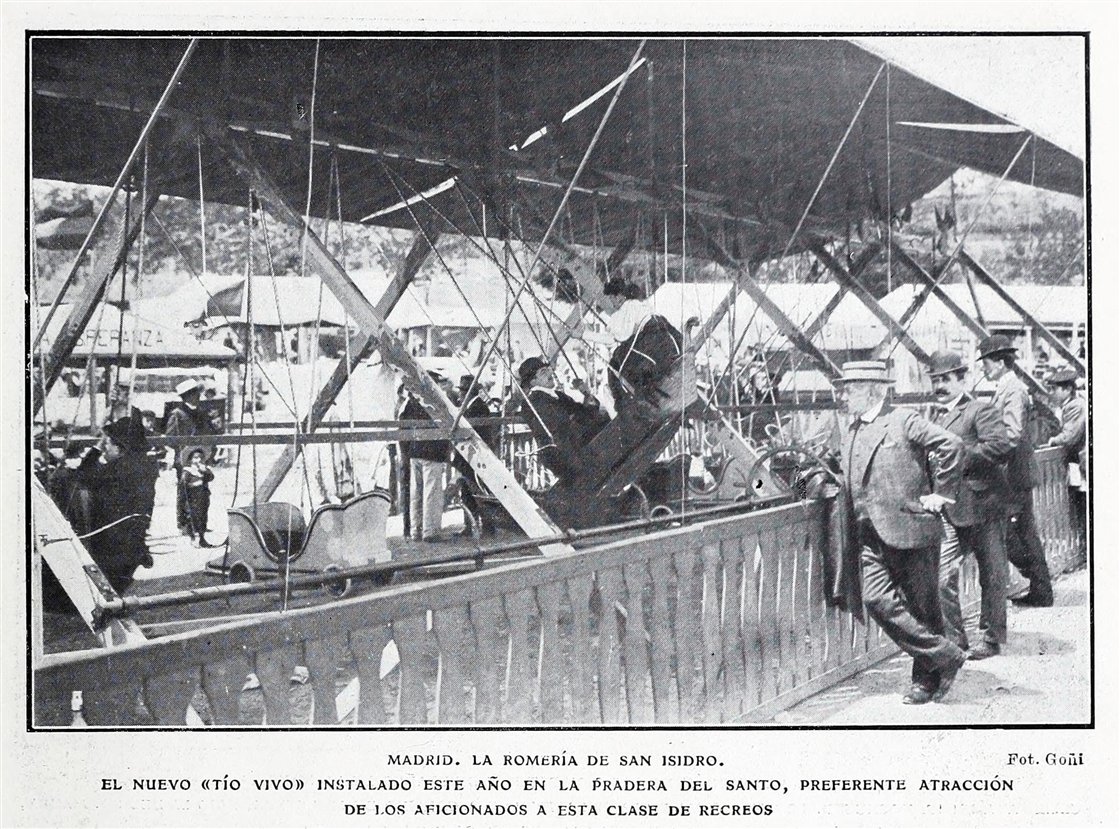
On May 15, Madrid celebrates its patron saint, San Isidro Labrador. At the Pradera de San Isidro, the meadow that still hosts the festivities, people gather for the romería and eat rosquillas, the festival’s ring-shaped pastries. The crowds in Francisco Goñi’s 1907 photograph had another attraction to try that year, a newly installed carousel. Madrid’s San Isidro route

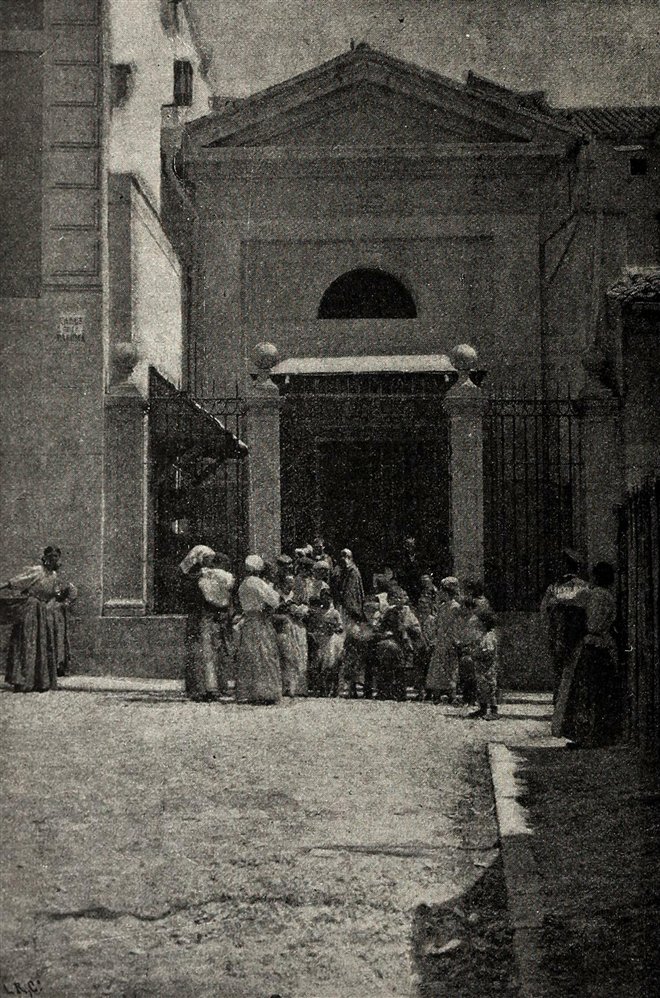
In August the fiestas move to the streets of La Latina for La Paloma, whose main day is August 15. Alongside the celebrations for the Virgen de la Paloma, there’s a verbena, an open-air neighborhood party with music and dancing. Christian Franzen’s photograph shows how the old chapel looked during the summer of 1895. Madrid’s guide to the August fiestas

A dance on one tile
The chotis is danced in pairs, traditionally to the sound of an organillo, or barrel organ. One dancer turns in place while the other circles them. The old test is whether you can do it without stepping off a single floor tile. One of the best-known tunes is Madrid, often called Madrid, Madrid, Madrid, by the Mexican composer Agustín Lara. The recording below is by Lola Flores. Madrid’s guide to the chotis · Gran Vía’s musical history
Open Madrid, Madrid, Madrid by Agustín Lara, performed by Lola Flores on Spotify
I started with a typeface for a Jekyll theme. I still like that following its name back takes you from the letters on a screen to the lettering over a Madrid street and, if you go in May or August, to a place where you might see someone dancing on a tile. Use the typeface on your site.
The cover is an AI-generated illustration of a chulapa in La Latina.